Lyrics Context:
An arrange of “Eastern Judgment in the Sixtieth Year ~ Fate of Sixty Years”, the boss theme for Eiki Shiki, who is a being who judges (all) beings (youkai, demons, angels, humans like) after death in the Touhou Project universe (more below).
I translated this because the ‘official’ translation from Yuuhei Satellite itself stops making sense in the second half.
花鳥風月 (Kachou Fuugetsu) literally means
“Flower | Bird | Wind | Moon” but is a four kanji expression for the “beauty of nature”.
嗚呼 華のように鮮やかに
さあ
嗚呼 鳥のように優雅に
嗚呼 風まかせも心地良い
さあ
嗚呼 月明かり照らされて
aa hana no you ni azayaka ni saa
aa tori no you ni yuuga ni
aa kazemakase mo kokochi yoi
saa
aa tsukiakari terasarete
Aah, vibrant like flowers
Aah, elegant like birds
Aah, the pleasant feeling of giving yourself to the wind
Aah, to be illuminated by the moonlight
正しさなんてもの
人のモノサシによって変わる
この世界 不変あるとするならば
華鳥風月
厳かで美しいもの
tadashisa nante mono
hito no monosashi ni yotte kawaru
kono sekai fuhen aru to suru naraba
kachoufuugetsu
ogosoka de utsukushii mono
That which we call “righteous”
changes depending on the ruler that a person uses to measure it
If there is something in this world that never changes[1] ,
it’s the beauty of nature,
in it’s dignified loveliness
後悔をして
学び また歩もう
二度と過ち
繰り返さぬように
koukai wo shite
manabi mata ayumou
nidoto ayamachi
kurikaesanu you ni
And so we regret,
we learn, and move on
So that we will never repeat
the mistakes we have made
歴史とは
変わらぬ感情が
廻り廻って
傷付けて和解された
世界の成長
rekishi to wa
kawaranu kanjou ga
megurimegutte kizutsukete wakai sareta
sekai no seichou
“History” is
the growth of the world
When unchanging feelings spread around and around, hurting and coming to terms with each other
It’s the growth[2] of the world
正しさなんてもの
大人にも分からない
幻想
この世界不変ある
とするならば
華鳥風月
穏やかで懐かしきもの
tadashisa nante mono|
otona ni mo wakaranai
gensou
kono sekai fuhen aru
to suru naraba
kachoufuugetsu
odayaka de natsukashiki mono
That which we call “righteous”
even the adults don’t understand
– a fantasy[3] –
If anything in this world
could be said to be unchanging,
it’s the beauty of nature,
calming and nostalgic
汚れぬことが
正義なのだろうか?
過ちの中にあるけじめに
魅せられ知った
穢れを恐れぬ愛も
正しさと言う事
yogorenu koto ga
seigi na no darou ka?
ayamachi no naka ni aru kejime ni
miserareshitta
kegare wo osorenu ai mo
tadashisa to iu koto
Can we say that things without impurity[4] are ‘righteous’?
Fascinated in the distinction we make between right and wrong found in our mistakes,
we can also say that love, unafraid of being made impure, is also something we can say is “righteous”
形無いからこそ
感じようと思える
それも
生けるものすべて内側に持つ
華鳥風月
測れないから意味がある
だからこそ 愛を彷徨う
katachi nai kara koso
kanjiyou to omoeru
sore mo
ikeru mono subete uchigawa ni motsu kachoufuugetsu
hakarenai kara imi ga aru
dakara koso ai wo samayou
Because it is formless[5]
we try to feel it–
this also is
something held within all living things
— The beauty of nature[6]–
It has meaning because it can’t be measured
And that’s why love will wander[7]
悲しめる心も
恐れる優しささえも きっと
生けるものすべて内側に持つ 華鳥風月
何処までも美しくなれ
いつまでも美しくなれ
kanashimeru kokoro mo
ikareru yasashisa sae mo kitto
ikeru mono subete uchigawa ni motsu kachoufuugetsu
dokomademo utsukushiku nare
itsumademo utsukushiku nare
A mourning heart
and even fearful kindness are surely
something held within all living things
— The beauty of nature —
Remain beautiful no matter where
Remain beautiful no matter when
Translation Notes:
[1] Eastern thought states that the only consistency in the world is inconsistency, so this is more of a statement than it looks.
[2] 成長 (seichou) means growth, but it also means “to become an adult”
[3] This section is intentionally in a weird order because I wanted to match the emphasis put on last word – 幻想 (gensou – fantasy / illusion)
[4] 汚れぬ (without being dirtied) — this gets held in the context of impurity (穢れ) in Japanese Shintoism/Buddhism;
“In religions such as Buddhism and Shinto, there is the concept that acts and states such as death, childbirth, menstruation, eating meat, and sin are impure and abhorrent.”
Do we have to be sparkly clean of sin to say that we are acting justly?
[5] Formless is what she says, but to clarify, “because it has no physical form”
[6] Hard to coordinate this into English, but she’s saying these things are an aspect of Beauty of Nature just as much as the flowers, birds, etc.
[7] 彷徨う (samayou) is a pretty romantic way to say that one wanders without much of a direction or purpose
More context:
For a Western Audience who has seen Dragonball Z, I think it’d be easiest to explain that Shiki Eiki Yamaxanadu is King Yama from DBZ, even down to the comedic aspects of the character (at least, in her portrayal in the games).
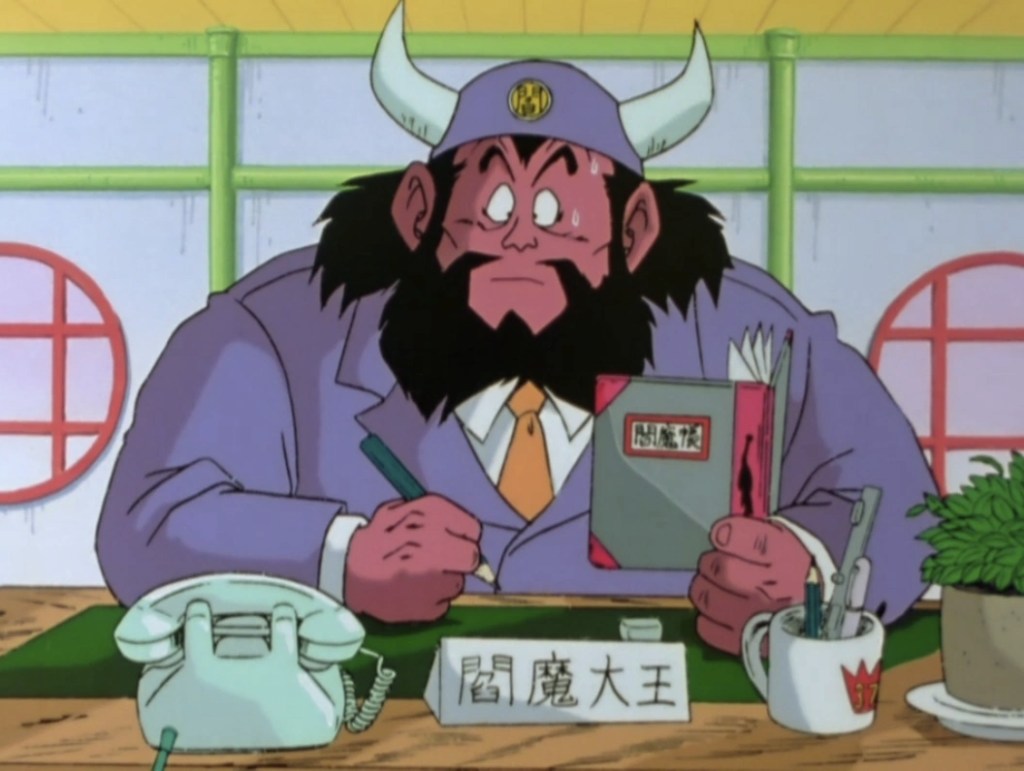
In the game where this song is introduced (東方花映塚 (Eastern Flower Reflection Mound) ~ Phantasmagoria of Flower View), the main touhou character cast explores why a particular flower mound is blooming; as it turns out it’s just time for a bunch of souls to be transmigrated to another life (and since it happens every 60 years, only a few characters are old enough to remember). The final boss is Eiki Shiki who comes to investigate why these souls are being held up from her judgment, and while doing so she “fights” the characters.
Every character has a unique interaction and dialog with Eiki Shiki where she tells them precisely what they character flaws are and that they need to repent and reflect on their actions in order to right their wrongs and avoid a terrible judgment upon death.
A good example can be found here:
https://en.touhouwiki.net/wiki/Phantasmagoria_of_Flower_View/Story/Reimu%27s_Scenario#Reimu_vs._Eiki_(Episode_Final)

 Dancing Funkos
Leave a comment