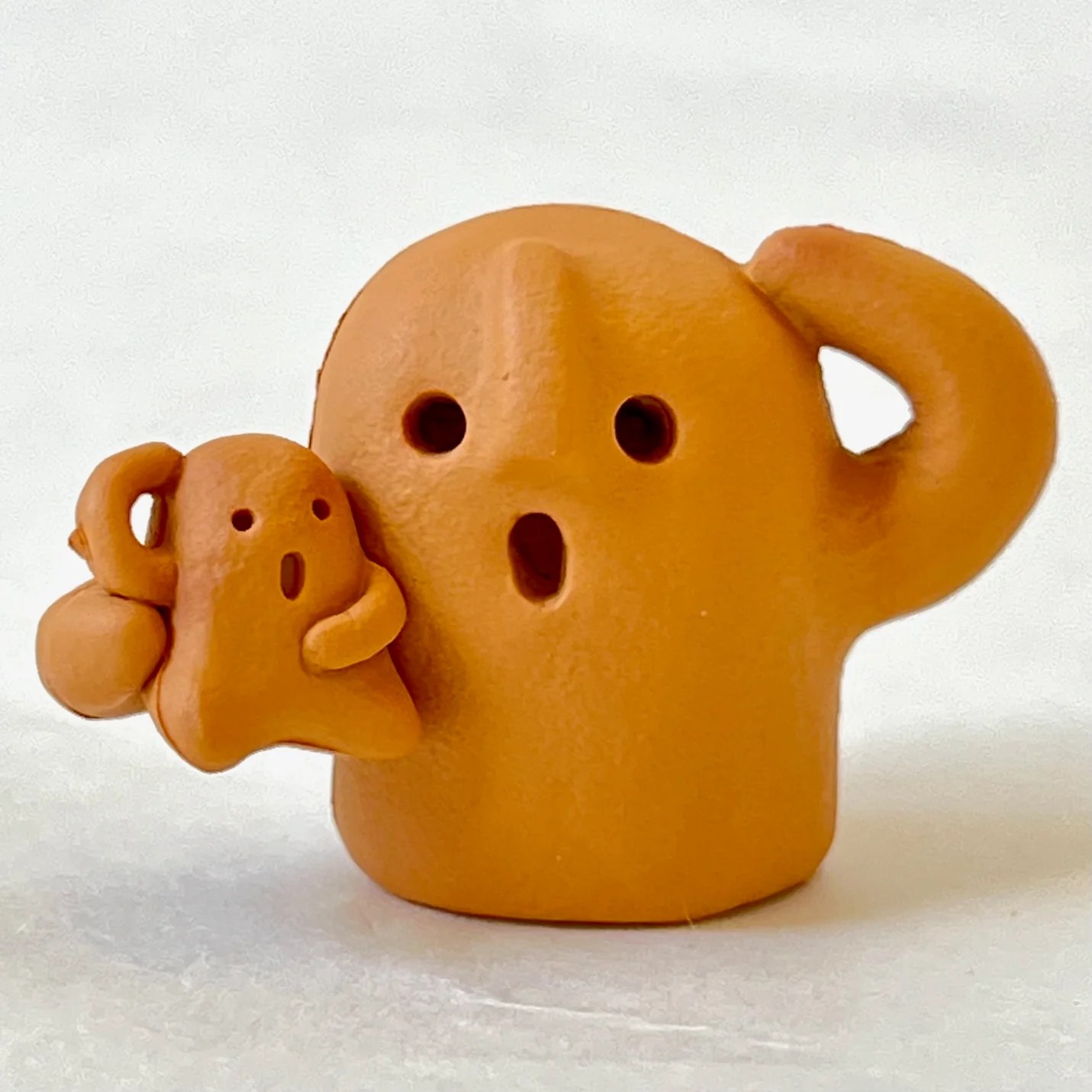
(American Idol text. Cute.)
Lyric summary/context below the lyrics, I highly recommend reading them.
遠いステージで光ってる || Tooi suteeji de hikatteru
触れられない idolaのような || Furerarenai idola no you na
ああ~ 未来こそが || Aa~ mirai koso ga
She was shining in a distant stage
Like an Idola** that was out of reach
Ahhh~ I’ll get it next time
感じられるかな || Kanjirareru kana
いつでも || Itsudemo
胸の奥 || Mune no oku
産声を待ってる || Ubugoe wo matteru
Idola ラスボスで Believer || Idola Rasu bosu de Believer
Can you feel it, I wonder?
All the time
Deep in your heart
A newborn cry is waiting
Idola, I’m a believer in the last boss
[Bridge]
You can change the world
たった一音が || (Tatta ichion ga)
And with just one single sound
(You can change the world)
過去を壊して || Kako wo kowashite
Destroying the past
(You can change the world)
たった一語が || Tatta ichigo ga
With merely a single word
(You can change the world )
未来を創る|| Mirai wo tsukuru
The future will be created
[Chorus]
Let me Rave again
(叫べ) | (sakebe) – scream out
Rave again
(鳴らせ) | (narase) – let it ring out
Rave again
心突き動かす ファンファーレ || Kokoro tsuki ugokasu Fanfaare
嗚らせ (Narase) || Saa ima koete
さあ今 超えて || Saa ima koete
魅せてやろうかイドラデウス || Misete yarou ka Idora Deusu
That Fanfare that spurs my heart on
Scream out, and now, go beyond
Shall I give you a show? Idola Deus
Rave again
(叫べ) | (sakebe) – scream out
Rave again
(鳴らせ) (narase — let it ring out)
Rave again
俺たちしか描けない音に || Oretachi shika
Kakenai oto ni
Gensou wo yudanete
(鳴らせ) (narase — let it ring out)
幻想を委ねて || Gensou wo yudanete
With that sound that
None but we can depict
(Let it ring out!)
let us entrust our dreams/fantasies up to this sound!
勘違いとか 自惚れと || Kanchigai toka unubore to
誰もがまだ idolaと笑う || Daremo ga mada idola to warau
そんな 積もった毒が || Sonna tsumotta doku ga
With mistaken perception and egoism
Everyone still laughs (when I bring up) ‘idola’
With such built up malice…
信じられないけど || Shinjirarenai kedo
あれから || Are kara
少し大人になってしまったと || Sukoshi otona ni natte shimatta to
Idola 言い訳を生んでく || Idola iiwake wo undeku
I can’t believe it, but…
After that
When I had become a little bit more of an adult I unfortunately knew:
Idola births excuses
Song Context/ Notes:
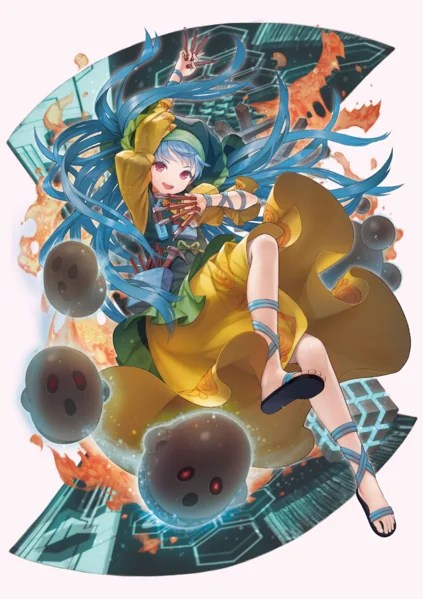
The final boss of Wily Beast and Weakest Creature (TH17), Keiki Haniyasushin is the god of idolatry/idols.
Since she’s from a Touhou (bullet hell) game, reaching her is very difficult.
This song is about how the journey to reach (and beat) Keiki to beat Touhou 17 is itself colored in a lot of religious/philosophical questions tied to the game’s themes.
To summarize the game’s plot as short as I can….
Buddhists believe in the 6 realms of existence, two of which are the animal realm (畜生道) and the human realm (人間道). It is implied at the very least culturally in Japanese culture that humans are a bit unique, living in two realms at once, as one of the worst insults you can tell someone is that they are a 畜生 (chikushou) — a human with an animal (beast) spirit inside them.
Touhou 17 takes this and runs with it — in Touhou 17 the Animal Realm looks like a modern metropolis and is where humans are sent to as punishment for acting like animals. In this realm, the ‘shining law’ is the law of the jungle, and human spirits are oppressed by other animal spirits as ‘the weakest creature’ to slave away for them.
The human spirits in their desperation to find salvation from this oppression collectively ‘will into existence’ a God of Idols, Keiki Haniyasushin (the ‘last boss’ the song brings up). She encases these spirits’ souls inside Haniwa (https://en.wikipedia.org/wiki/Haniwa) — in exchange for losing their freedom of action, the spirits are invincible to the animals and are ‘liberated’ from them.
This causes the animal spirits to become desperate — they can’t attack the haniwa — so they scheme up a plan to possess one of the 3 human playable characters to fight the Haniwa for them. The game’s story does not explain any of this at the start, only that the animal realm is under attack and it’s up to the ‘heroes’ to ‘save the day’.
—————————————————–
As this song was written for and by people who have played the game, I’ll try to expand on the lyrics and explain what they are trying to say.
‘She was shining in a distant stage
Like an Idola** that was out of reach
Ahhh~ There’s always a next time’
Keiki is the god of Idols (Idola Deus), which are figures or items we use to represent concepts or ideas. The song uses the world ‘idola’ (which the game uses just as often), which in Japanese exclusively refers to Francis Bacon’s ideas of idols:
https://en.wikipedia.org/wiki/Idola_fori
‘Can you feel it, I wonder?
All the time
Deep in my heart
A newborn cry is waiting
Idola, I’m a believer in the last boss‘
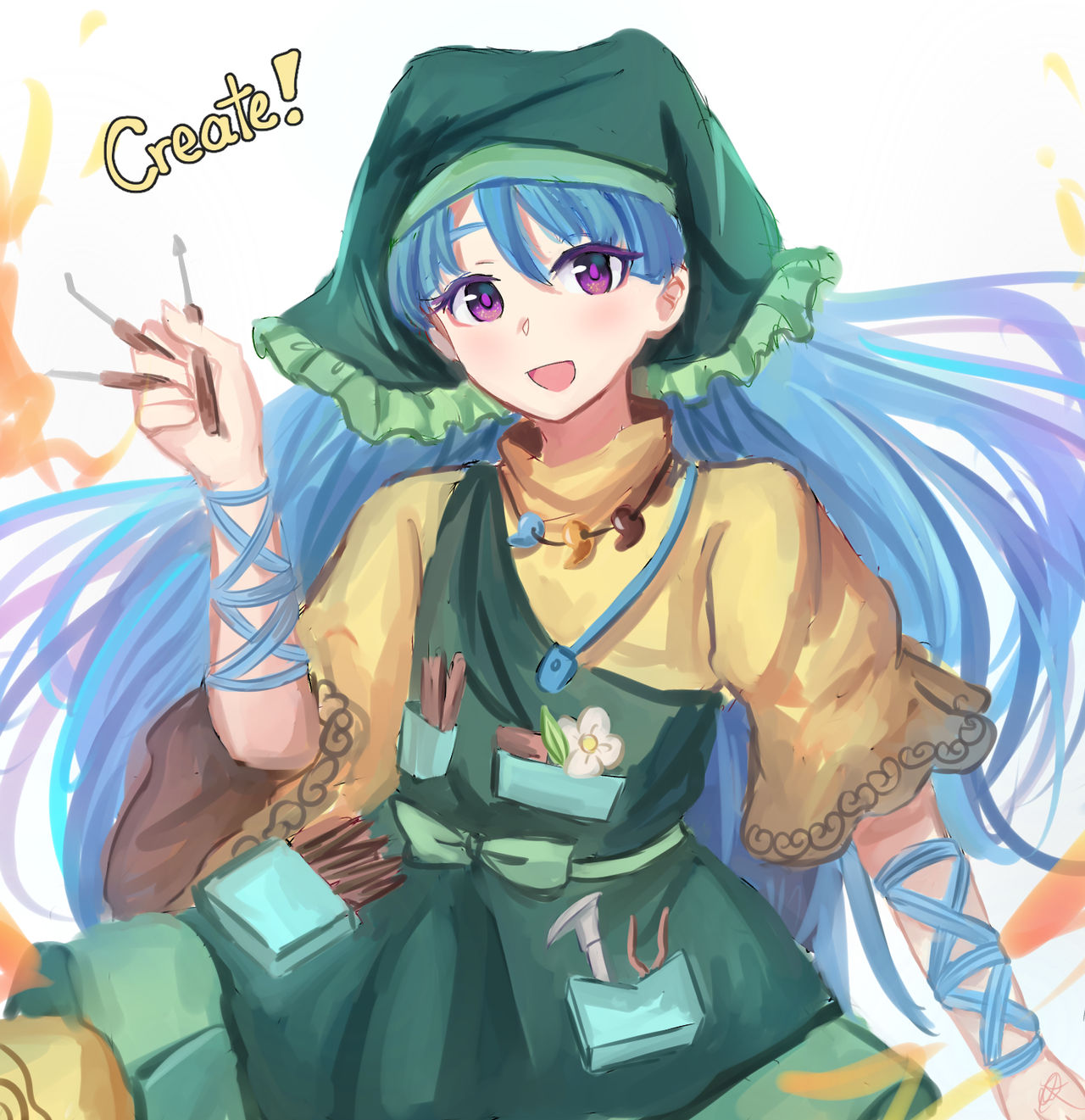
She looks like a craftsman. She creates and gives life to new [concepts/ideals] through being the creator of [whatever it is that turns an object into an idol]. When she is portrayed in the game, she is viewed sympathetically despite being the final boss — she bears no ill will towards the protagonist and even tries to get the (human) main character to see her point of view and join her. The game is designed so she is the sympathetic one rather than the ruthless spirits who possess the main character, and so the player is left wondering ‘am I the bad guys?’
Even among the fanbase (esp. of people who don’t play the games) Keiki is seen as the protagonist and the game’s story is that of a villain protagonist because of how the situation is framed.
‘With merely a single word
The future will be crafted (composed)’
That single word is “Create!” — it appears above her head on her sprite in the game)
With mistaken perception and egoism
Everyone still laughs (when I bring up) ‘idola’
Such built up malice….
Idolatry and Iconoclasm are at the heart of many of the most bloody conflicts and divisions in human history…yet ask someone who is neither religiously inclined nor a strong historian why either of these things actually matter and you’ll get a confused look at best or an arrogant dismissal. Idols and Idolatry are all over the place in modern society (albeit with a different name) but trying to explain this, or worse, explaining where you got the idea from?
“I can’t believe it, but…
After that
When I became a little bit more of an adult I knew:
Idola births excuses”
Beating the game and exploring all the 9 endings leaves this message behind, more or less. The game dialogue portrays Keiki as an innocent figure who is a hero to the human spirits, but the endings go in depth to explain that Keiki is no less oppressive to the human spirits than the animal spirits are. Humans are just a resource to ‘fill out’ her creations, and despite being the god of creation itself, she doesn’t remarkably care about the human spirits, only that they create and embody themselves in their creation.
Before I continue more, let me emphasize that Buddhism does not view divinity the same way, and so a Japanese interpretation requires a bit of an explanation.
Idols are representations of what we like to call ‘the divine’ — this is usually gods, but gods themselves are often the ‘avatar’ or ‘quintessential’ version of something — Ares is the god of war, Aphrodite the god of love, and so on — if you create an object that represents them and you look at these idols as being the ‘real world representation of a god of an ideal’, it can give contextualization and wisdom just by what we attach to the idol, right?
But if one was to instead look at an effigy or idol as being the ‘ideal of something’ that an ‘object of direct worship’ rather than as a ‘guide to an ideal’, then one can easily find themselves holding themselves losing the original point of the idol in the first place.
When “Idola” are worshipped this way, it becomes a birthplace for excuses — “I couldn’t do it because god said I couldn’t” or accepting “I can’t match perfection so why bother”.
Idola gives a vision of an ideal but it can also trap people into perfectionism, or worse, missing the point of an ideal in the first place.
Keiki’s theme song itself is called “Entrust the world to Idols ~ Idolatrize World” because people leave the definition of things up to idols (whether a person, a rule, or gods, anything). These rules give us the freedom to do things that go beyond simple self interest / law of the jungle, but because these idols are themselves arbitrary and based around conceptions of ideals/symbolism rather than the ‘ideal’ itself, in the end they shackle us all the same.

 Dancing Funkos
Leave a comment